
The Only Proven Longevity Supplement

The Intervention Testing Program (ITP) is a research initiative funded by the National Institute on Aging (NIA) to evaluate potential lifespan-extending interventions in mice. Its purpose is to rigorously test compounds that might slow aging and improve healthspan.
In recent years, the ITP has received increasing attention. It is arguably the best and perhaps the only program in the world able to test the effects of compounds on healthspan and lifespan in a truly rigorous way. The program is multisite, uses genetically heterogeneous mice, is blinded and controlled, and operates with a high degree of transparency. In addition, after the mice die, their tissues and organs are evaluated histologically, a step that is still relatively rare in this field.
Notable successes are SGLT-2 inhibitors (14% lifespan improvement in males only), rapamycin (lifespan improvement depends on the dosage and sex but are on the order of 15-20% – the overall most consistent result), acarbose (22% in males and 5-10% in females), and 17-alpha estradiol (19% in males only). Notable failures were NMN/NAD+, resveratrol, and metformin (the ladder at least when not combined with other interventions).
The over-the-counter supplement astaxanthin increased male lifespan by 12%, which is a striking result.
How does it work? We do not know exactly, but it has been shown to influence multiple genes associated with longevity, including FOXO3 (commonly found in centenarians), Nrf2 (a master regulatory transcription factor controlling antioxidant protein expression), Sirt1 (whose precise role and relevance in humans remain unclear), and Klotho (known for its role in phosphate excretion via FGF23, but likely involved in many other processes).
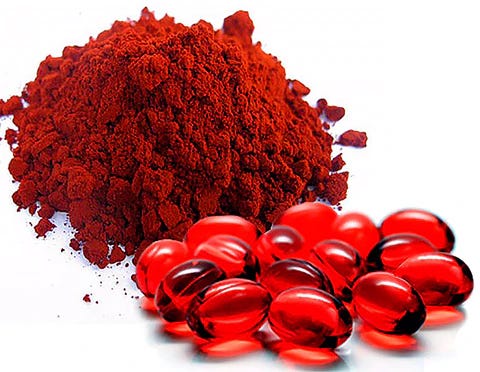
Astaxanthin had previously shown fairly strong lifespan-extending effects in other species, but in my opinion none of those experiments demonstrated the effect with the level of rigor achieved by the ITP.
Astaxanthin is the first widely available supplement shown in the ITP to extend lifespan by more than 10%. As with several other interventions (e.g., canagliflozin, acarbose, and 17-alpha estradiol), the effect was observed only in males. Why this sex difference occurs remains unknown.
As a side note, astaxanthin is the pigment that makes flamingos, salmon, and shrimp pink.
I personally take 12 mg of astaxanthin per day.