
Why Do I Biohack Aggressively?

There are probably a number of different explanations, depending on the angle.
From a biological perspective, I would argue that my dopaminergic tone is quite high and I am just inherently curious. For some reason, I found biology particularly interesting, particularly the applicable aspects of it, and I have a lot of fascination regarding applying DIY-biology to my life.
From a personal/egocentric perspective, I would argue that I self-experiment so much because I want to “maximize” the only life I can be sure of having in this universe. Given that I found out about the incredible influence biology has on the subjective (well-being) and objective aspects of my life (life trajectory), I want to optimize the biological domain as much as possible (and I want to help others do the same). I use biohacking to optimize pretty much every area from energy levels, sleep, practical intelligence, looks, metabolic health, romance, etc.
From a psychological/psychotherapeutic perspective, one could argue that I want to make myself “better” because for a long time I have had a deep-seated feeling of not being ”good enough the way I am naturally”. This may stem from being yelled at a lot for little reason throughout my childhood, elementary school bullying (as I moved to a different elementary school at the age of 8 I was bullied for 4 years for no reason), and a feeling of “inferiority” because of my former lack of height.
From a rational/”mathematical” perspective, I believe that the potential rewards of finding something that makes my life “better” for years to come outweigh the costs & risks of intervening. Biohacking then just becomes a rational choice that, over the long run, pays a lot of dividends.
Background
Over the course of my life, I was held back by my biology many times. At various points, I struggled with low energy levels, bad mood, lack of motivation, trouble concentrating, brain fog, terrible sleep, or a ravenous appetite. More often than not, these were problems of the body and not the “mind”.
For the past decade or so, it has been my hobby to hack my biology. If I want to improve something, I research it, decide on an intervention, implement it, track the results, and draw conclusions to find out whether something works for me or not.
More than once I realized that many of the best changes I can make are unknown until I make them. In this regard, feeling “fine” is potentially a dangerous attitude because it prevents me from getting to know how much better I could feel or function.
In his book Antifragile, Nassim Taleb is a big proponent of trial and error, which he calls “tinkering”, as a way to figure things out and expose yourself to large potential upsides. Similarly, my best “innovations” came from making an educated guess and simply trying things out. While about 95% of my experiments were failures, the remaining 5% easily made up for them, and I am deriving benefits to this day.
Biological intervention is always a complex calculation of tradeoffs and carries significant risks, although there are significant risks from doing nothing as well – this point is often neglected. For me, the potential gain from (prudent) self-experimentation has thus far vastly outweighed the risks and side effects associated with it.
If I find something that suits my individual biology, needs, and preferences, I can potentially derive compound interest in many domains of my life for many years to come. Furthermore, the non-zero-sum nature of my world implies that if I improve my health, happiness, performance, and productivity, it benefits not just me, but also those around me – a concept known as “moral bioenhancement”.
I would go as far as to argue that if I were low energy and depressed all of the time, it would be quite unethical not to intervene, because the state I am in has direct and indirect effects on my fellow humans, and not taking action is a form of action in itself.
Guiding principles
Principle #1: Biological factors are important.
A good friend of mine is doing quite well for himself. He is in his final year of med school, has already started two businesses, is great at sports, and an active dating life. He attributes much of his (conventional) success to his hard work and “mindset”. He does not understand people who are lazy and who do not try hard at the only life they can be sure of having.
Then, long-COVID hit and his 90th-percentile energy levels, mood, and drive were instantly taken away from him. Suddenly, maintaining a great “mindset” and hard work was much harder. He was forced to realize how easy life had been for him, in part because he had always been feeling very energetic, enthusiastic, and motivated, all of which he had taken for granted.
Not until he had lost what he did not even know he had, did he realize how lucky he had been in the biology department. Now, for him, life is hard and sucks and he is only slowly getting better. Perhaps subtly looking down on “lazy” people was not fair after all because there were underlying conditions that had enabled him to be good at life. For reading about how the story continued and how he is doing now, click here.
Similarly, let’s imagine I had my best, most vital hour of the day (for me, usually the first hour after waking up) extended to the entire day. 7 days a week. 365 days a year. Where would I be 10 years from now (psychologically, physically, financially, socially, intellectually)?
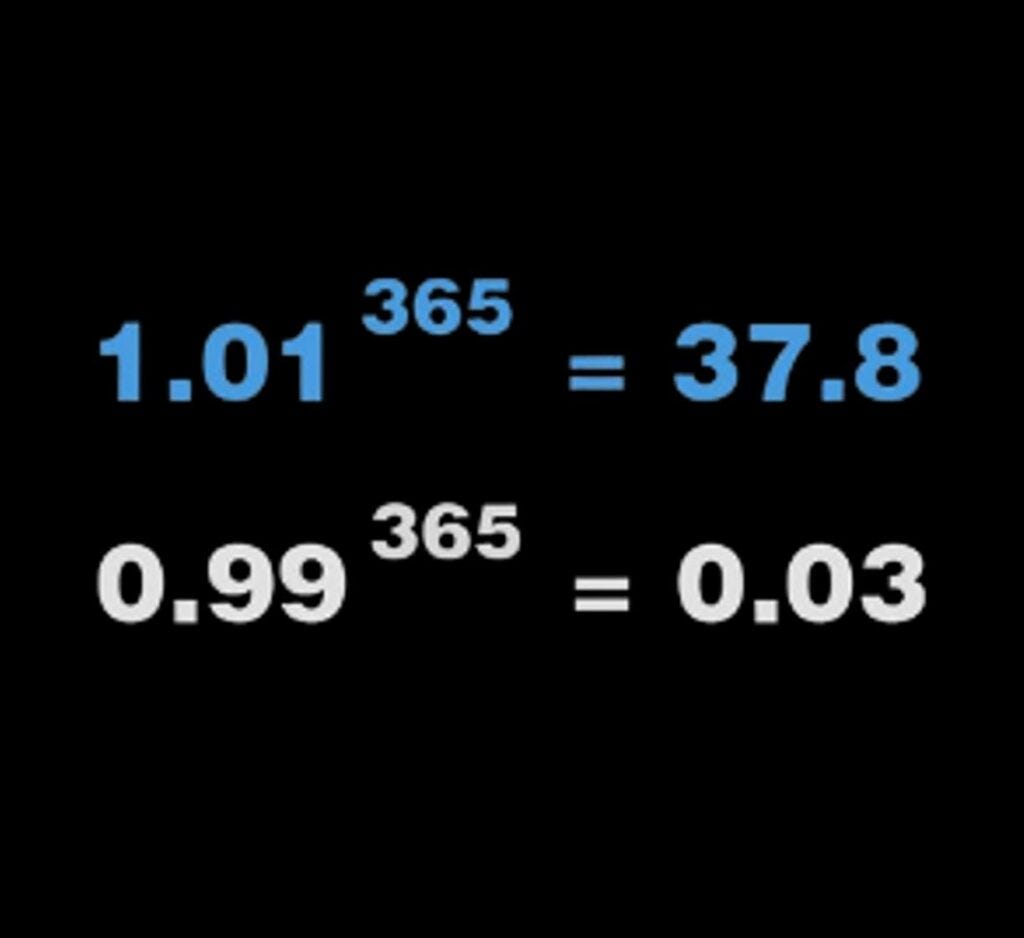
Biological factors ripple through my life in the same way an earthquake ripples through the Earth’s crust. My energy levels, mood, health, motivation, concentration, emotionality, memory, and cognition (all of which have strong biological underpinnings) affect me every waking second of every single day.
These biological factors then influence my thinking patterns, the lifestyle I lead, the decisions I make, the relationships I have, my productivity, my happiness, and much more. Whatever I want in life, whether that is creating, contributing, achieving a specific goal, or simply living life to the fullest – my biological makeup can make or break it.
Furthermore, everything I do has ripple effects that spread far beyond where I can ever see them. Something I do may affect the way someone else interacts with others, which in turn may affect how they interact with others, and so on and so forth.
I change the path of all of the lives I touch, sometimes imperceptibly, sometimes drastically, even though in most cases I will never realize it. Again here, biological factors will co-determine my impact on the world and others.
I discuss this principle in the form of a story in more detail here.
Principle #2: My mental and physical operating system is outdated.
When I was a child, I imagined archetypal nature to be this caring, nursing mother. However, as I learned more about the world, it turned out that romantic Mother Nature is rather cruel and callous. The Earth’s biosphere in its original state is incapable of supporting human flourishing as it is naturally infested with predators, parasites, food scarcity, and a variety of diseases.
Given that this was the evolutionary backdrop against which my ancestors’ bodies and minds developed, I now find myself in an utterly unnatural environment. In the same way that humans invented technologies to tailor the biosphere to human flourishing, I can use technologies (e.g., pharmacology) to update my body and mind to the contingencies of the modern world.
When an animal is living in the environment & conditions in which it evolved, the gratification of its drives & instincts usually maximizes reproductive fitness. However, the instincts of my Stone Age mind are not a reliable guide in the modern world for what is “good” for me.
The life that I experience today is not the life that my primate DNA had been prepared for. My body and mind have evolved for a very different era and have not yet adapted to the modern environment, which includes artificial lighting, pollution, processed food, appetite being set to excessive levels, a sedentary lifestyle, living beyond the age of 50, prolonged stress, intense schedules, loneliness, social media, a requirement for constant mental alertness, an altered circadian rhythm, among others.
Because my body and brain evolved for a different environment, my biochemical machinery and physiology are outdated and not well suited to the unnatural modern ecosystem I currently live in. However, for the first time in history, technology allows me to overcome some of these biological limitations.
For example, in the past, food was usually quite scarce and therefore, my ancestors evolved to be drawn to junk food, overeating, and storing fat. However, this is maladaptive in the modern-day environment. The fact that modern food has been engineered to trigger overconsumption surely does not help either (sweetness; umami; mouthfeel; caloric density; flavorings; crunchiness; etc.).
My primitive brain is therefore mismatched to this modern ecosystem of convenience and abundance and an orchestra of mechanisms wants me to pig out. For many members of my species, food addiction, obesity, type II diabetes, and cardiovascular disease are a consequence.
As soon as I started to use GLP-1-agonists to update my homeostatic and hedonic aspects of food intake, cravings and food-related thoughts were gone. Instantly.
This also makes me wonder whether we humans are generally unfit for the future in the same way our “thrifty genes” are unfit for the present. Fortunately, the ability to discover and use explanatory knowledge (a.k.a. science) gives us humans the power to transform nature and ourselves – limited only by the laws of the universe.
In this manner, I can use “biohacking” to update my biological operating system to the contingencies of the modern world. In my view, using technology to counter these limitations is just as natural as living in the current unnatural world in the first place. If some upgrading happens along the way, I do not mind.
Principle #3: Technology is the driver of human progress.
For the past 50 years, pharmacological and technological self-modification allowed athletes to vastly surpass human peak performance in pretty much every sport. Similarly, it is thought that drive and mental performance went up on a population-wide level after the introduction of caffeine around the time of the industrial revolution.
We as a species made it this far because we continually shared information, collaborated, and engineered solutions to problems and conditions we wanted to change. Without this ability, my ancestors would presumably not have progressed beyond living in trees, let alone caves. In fact, throughout history, most humans have lived in a sick society: malnourished, infected, and often mentally impaired. Enter science and technology.
For a long time, humanity had been using science to study how the world works, and then applied the discoveries of science to achieve specific goals. The ability to discover and use explanatory knowledge gives humans the power to transform nature and themselves – limited only by the laws of the universe.
Scientific materialism is our best story of the world. Hence, technologies work. In terms of medicine, pharmaceutical drugs are among humanity’s major technologies. By using knowledge of how the body works, humans create molecules that perturb the body’s molecular signaling to produce a desired effect.
Like any other technology, pharmaceutical drugs have both risks and benefits. However, as with other technologies, the upsides can outweigh the downsides if the technologies are applied wisely.
For more: Paradise Engineering: The AGI Aspect I am Most Excited About
Principle #4. There are better and worse drugs.
A friend of mine was heavily addicted to weed, which more or less derailed his life. He had a hard time coming off and I suggested the temporary use of bupropion to help him quit. In part thanks to the boost in energy, mood, and motivation, was he able to come off quite quickly.
Evolution’s goal was to increase reproductive success – and not personal well-being. Natural selection does not care about how genes are passed on, only that they will.
As a result, humans tend to be naturally in a state of constant low-level dissatisfaction, because being low-level dissatisfied was probably more adaptive than being content or blissed out. In part because evolution did not prioritize emotional well-being, humans have turned to drugs ever since.

Large parts of the population currently consume either alcohol, cigarettes, or toxic amounts of sugar – or a combination of these. Millions of others consume weed, amphetamines, opioids, or cocaine. These drugs provide temporary pleasure but almost always have negative long-term consequences when used continuously.
Viewed in terms of mortality, morbidity, or life enjoyment, I am likely better off if I switched to “good drugs” instead, namely drugs that have long-term beneficial effects on myself and my loved ones (“moral bioenhancement”). From personal experience, I can say that these drugs do exist.
Furthermore, using the fruits of modern medicine wisely can help me establish a happier baseline state, and create a life that is fulfilling in itself, which makes using pleasure shortcuts less tempting in the first place.
I do really agree on everything. Tho I found an interesting point on X for the opposite view, might interest you:
(Is on Xcancel)
https://xcancel.com/i/status/2022285670358675780
Fair enough, thank you for the response.