
Why I Stopped Taking Rapamycin (For Now)

Every winter, I take a three-month break from rapamycin, usually starting in November. When I resume in March, I ramp up gradually: 1 mg once weekly, increasing by 1 mg each week until I reach my maintenance dose of 4 mg. The reason for the winter pause is simple: I noticed that I get sick far less often during the cold months if I'm off rapamycin. Virtually every illness I catch happens in winter, and removing the drug from the equation during that window has made a noticeable difference.
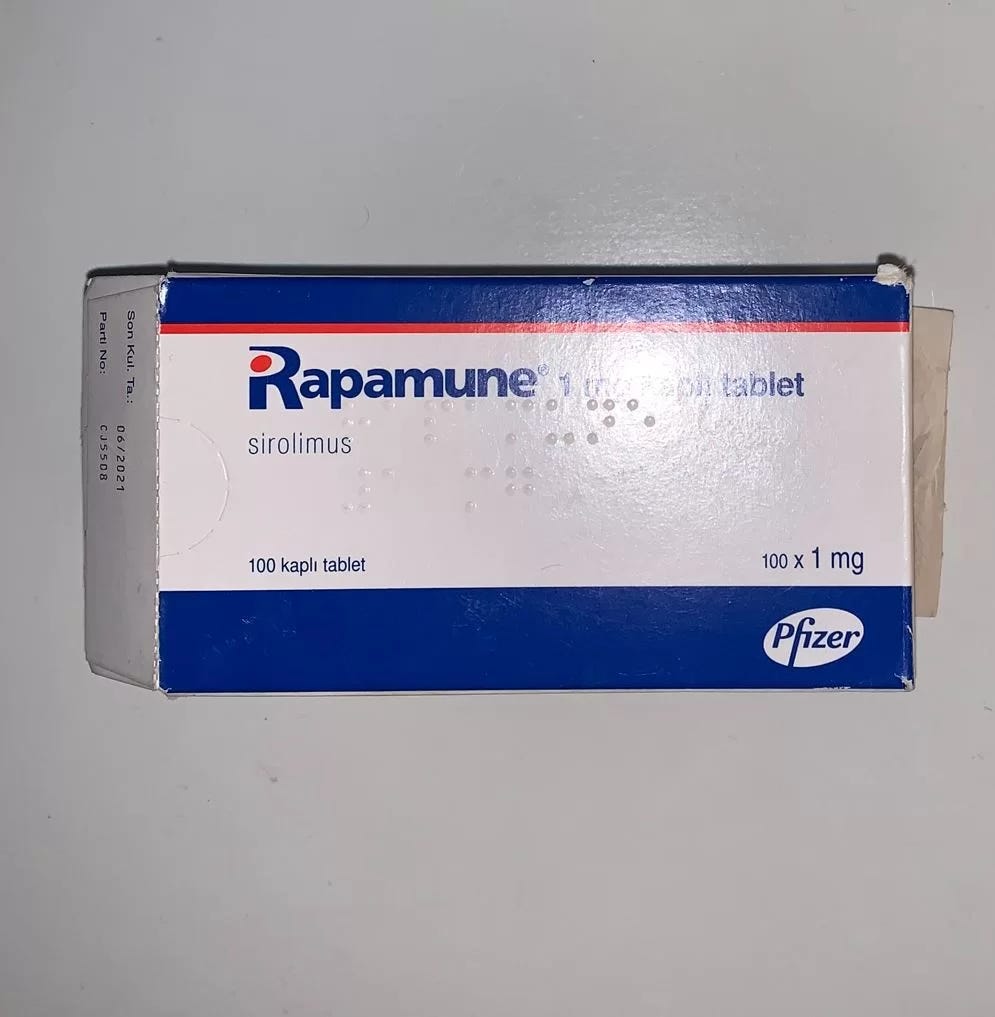
This time around, however, I skipped the ramp-up and jumped straight back in at 4 mg. Within days, I developed a herpes simplex (cold sore) outbreak on my lips, something I hadn't experienced in over a year. A friend of mine had an almost identical experience: he restarted rapamycin after an extended break and developed a cold sore within a couple of days. Both of us also noticed a fungal infection between our toes and the onset of dandruff, which is itself a fungal condition driven by Malassezia furfur overgrowth on the scalp. Fungal infections are a well-known hallmark of immunosuppression, and in both cases, the temporal association with rapamycin reinitiation was hard to ignore.
Let's not sugarcoat it: rapamycin is a potent immune suppressant, even at the relatively low doses used in the longevity community. Its FDA-approved indications (organ transplant rejection, certain cancers) are explicitly immunological. While some researchers have argued that intermittent, low-dose protocols may actually enhance certain arms of immunity (particularly via mTORC1-selective inhibition), the real-world signal from my own experience, and that of others, suggests that meaningful immunosuppression is occurring. This needs to be weighed honestly against whatever longevity benefit it confers.
Here’s a consideration that doesn’t come up often enough in longevity circles: timelines. If current trajectories in artificial intelligence hold, we may be looking at transformative breakthroughs in medicine within the next 5 to 20 years, with enormous uncertainty on the exact window. If that’s the case, the practical benefit of rapamycin for a young, metabolically healthy person becomes questionable. Most of its longevity effects are slow-burn: reduced cancer incidence, delayed onset of age-related disease, marginal extensions in healthspan. These benefits take decades to manifest. In the meantime, what you’re left with in the short term is immunosuppression, a possible reduction in vitality, and a drug that may be actively working against your day-to-day resilience.
Put differently: if the window until transformative medical AI is only a decade or two, the risk-reward calculus shifts substantially. Either we don’t make it that far (in which case rapamycin’s marginal lifespan extension is unlikely to matter), or we do (in which case far superior interventions will likely be available). In neither scenario does accepting immunosuppression and reduced vitality today seem like a strong bet.
The Cautionary Tales of Blagosklonny and Green
Mikhail Blagosklonny, the oncologist and researcher who arguably did more than anyone to popularize rapamycin for longevity, passed away recently. He was the author of the landmark paper “Rapamycin for longevity: opinion article” and had reportedly been taking high doses of rapamycin for years (up to 13 mg per week). Ironically, the man who authored over 300 papers on cancer progression and therapy died of cancer himself.
In fairness, his case is more nuanced than it appears. In his own words, a small mass in his lung had been visible on X-ray since 1991 and had changed very little over the following eight years, leading him (and his physicians) to dismiss it. As he later reflected, his identity as an oncology expert may have created a psychological blind spot: he felt invincible, suppressed his anxiety, and never revisited those imaging findings for 24 years, until 2023.
Similarly, Alan Green, one of the most prominent rapamycin-prescribing physicians and a vocal advocate for its use in aging, also passed away last year from stage 4 colorectal cancer, a death that may or may not have been related to his long-term rapamycin use.
In both cases, it’s genuinely impossible to say whether rapamycin was beneficial, neutral, or harmful. Everolimus (a rapamycin analog) continues to be used by millions of patients for the treatment of various cancers, and rapamycin itself is used widely for immunosuppression in transplant medicine, though rarely as monotherapy, which makes drawing clean causal inferences very difficult.
My gut feeling is that there’s a sweet spot with rapamycin. At low doses, it likely slows cell proliferation and may reduce cancer development. But at higher doses (or with chronic exposure), the degree of immune suppression may become counterproductive, particularly for cancer prevention. The immune system remains our most powerful endogenous anti-cancer defense, and anything that meaningfully blunts it deserves serious scrutiny.
Why I Stopped
For now, I’ve stopped taking rapamycin. My reasoning is straightforward: either transformative AI-driven medicine arrives within the next decade or two (in which case rapamycin’s marginal benefit is eclipsed), or it doesn’t (in which case I’ll reassess). There’s no compelling reason to accept the downsides today.
That said, I want to be clear: I’m not arguing that rapamycin is a bad idea for everyone. For individuals dealing with significant chronic inflammation, metabolic dysfunction, or accelerated biological aging, rapamycin may offer real, tangible benefits in the short to medium term, including improvements in how they feel day to day.
But for healthy young people, the equation looks different. The two things I dislike most about rapamycin in that context are its immunosuppressive effects (which are real and observable in my own life) and its potential impact on neuroplasticity. mTOR signaling plays a central role in synaptic plasticity, learning, and cognitive flexibility, and chronically suppressing it may come at a cost to the very vitality and adaptability that young people should be optimizing for.
For now, I’m keeping rapamycin on the shelf and focusing on interventions with a clearer short-term upside.